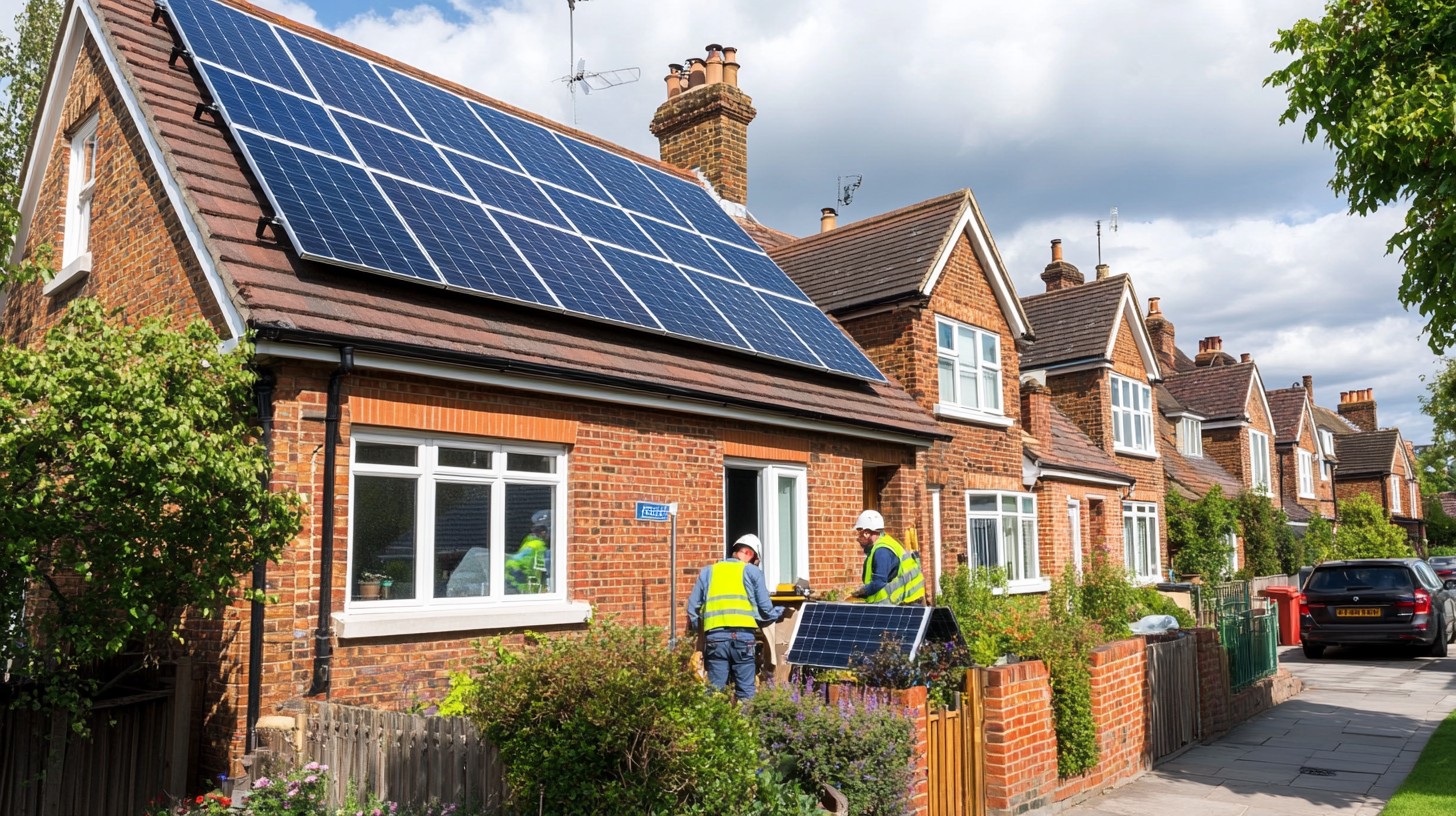
The question of whether to choose monocrystalline or polycrystalline solar panels represents one of the most common dilemmas facing UK homeowners considering solar installations. Whilst both technologies have proven themselves capable of generating meaningful electricity in British conditions, the choice between them becomes particularly nuanced when we account for the UK’s distinctive climate patterns and the varied roof configurations typical of British housing stock. The decision extends beyond simple cost comparison and requires careful consideration of how each technology performs in our specific environment of limited winter sunlight, frequent cloud cover, and often less-than-ideal roof orientations. This article explores the technical differences between these two dominant solar panel technologies and examines how their respective strengths and limitations play out under real-world UK conditions, helping you make an informed decision for your property.
Understanding the Core Differences Between Monocrystalline and Polycrystalline Panels
Manufacturing Process and Visual Characteristics
The fundamental distinction between monocrystalline and polycrystalline solar panels begins in the manufacturing facility, where silicon – the semiconductor material that converts sunlight into electricity – is processed in markedly different ways. Monocrystalline panels are crafted from single, pure silicon crystals that are grown in carefully controlled conditions and then sliced into thin wafers. This process creates solar cells with a distinctive uniform dark appearance, almost black in colour, with characteristic rounded edges where the circular silicon ingot has been trimmed to fit rectangular panel frames. The uniformity of the silicon structure is what gives these panels their name and their performance characteristics.
Polycrystalline panels, by contrast, are manufactured by melting multiple silicon fragments together and pouring them into moulds to cool and solidify. This creates a patchwork structure of many different silicon crystals rather than a single unified crystal. The result is immediately visible in the panels’ appearance – they display a characteristic blue colour with a speckled, almost fractured-glass texture, and the cells maintain perfectly square edges because they’re cut from square moulds rather than cylindrical ingots. These manufacturing distinctions matter considerably because the silicon structure directly influences how efficiently the panel converts sunlight into electrical current, with the single-crystal structure generally allowing electrons to flow more freely than the multi-crystal structure.
Efficiency and Power Output Specifications
The structural differences translate directly into performance variations that affect how much electricity you can generate from a given roof area. Monocrystalline panels typically achieve conversion efficiencies ranging from seventeen to twenty-two per cent, meaning they transform roughly one-fifth of the sunlight striking them into usable electricity. Polycrystalline panels, whilst still highly effective, generally operate in the fifteen to seventeen per cent efficiency range. This might seem like a modest difference on paper, but the real-world implications become significant when we consider the constraints of typical UK properties.
In practical terms, monocrystalline panels generate approximately fifteen to twenty per cent more electricity from the same roof area compared to their polycrystalline counterparts. For a standard four-kilowatt residential installation, this translates to needing roughly twelve to fourteen monocrystalline panels compared to sixteen to eighteen polycrystalline panels. This matters enormously for the many UK homes where roof space represents a genuine constraint – terraced houses, properties with complex roof structures featuring dormers and skylights, or homes where chimneys and other obstructions limit the available solar array footprint. The higher power density of monocrystalline technology means you can achieve your desired system capacity in a smaller physical area, or alternatively, maximise generation potential when roof space allows.
Performance in UK Climate Conditions
Low-Light Performance in Overcast Weather
The question that dominates many UK homeowners’ thinking about solar panels centres on performance during our famously grey weather. Britain’s climate delivers frequent overcast conditions, particularly during the autumn and winter months when cloud cover can persist for days. Understanding how different panel technologies respond to these diffuse light conditions helps set realistic expectations and informs the technology choice.
Monocrystalline panels demonstrate a measurable advantage in low-light conditions, maintaining relatively better performance when sunlight must penetrate cloud cover before reaching the panel surface. The purer silicon structure and more sophisticated manufacturing process create fewer internal barriers to electron movement, allowing these panels to extract more electrical current from limited photon availability. However, it’s crucial to understand that both technologies continue generating electricity during overcast weather – solar panels respond to daylight rather than requiring direct sunlight, and even heavy cloud cover allows meaningful light transmission. The practical difference manifests as monocrystalline panels typically maintaining five to ten per cent better output during cloudy conditions compared to polycrystalline panels at the same light level.
This advantage compounds over the course of a British winter, when overcast days predominate and solar angles remain low even at midday. The cumulative effect means that whilst both panel types will show reduced winter generation compared to summer peaks, monocrystalline installations tend to maintain a more favourable seasonal generation ratio, producing relatively more of their annual output during the challenging winter months when household electricity consumption often increases for heating and lighting.
Temperature Coefficients and Year-Round Efficiency
An often-overlooked aspect of solar panel performance relates to how they respond to temperature variations. Solar panels, somewhat counter-intuitively, actually lose efficiency as they heat up above their rated testing temperature of twenty-five degrees Celsius. This is quantified through the temperature coefficient, typically expressed as a percentage loss per degree of temperature increase. Monocrystalline panels generally exhibit slightly better temperature coefficients, losing approximately 0.3 to 0.4 per cent of their rated efficiency per degree Celsius, whilst polycrystalline panels typically show 0.4 to 0.5 per cent losses.
In Mediterranean or tropical climates, this difference becomes quite significant as panel temperatures can soar to sixty or seventy degrees Celsius on hot summer days, creating substantial efficiency losses. However, the UK’s temperate maritime climate presents a markedly different scenario. British summers rarely produce sustained extreme heat, and panel temperatures typically remain much more moderate. Even during summer heat waves, overnight cooling and frequent breezy conditions prevent the continuous high temperatures seen in hotter regions. This means the temperature coefficient advantage of monocrystalline panels, whilst still present, manifests less dramatically in UK installations than the efficiency and low-light performance differences. The moderate British climate actually helps both panel types perform closer to their rated specifications throughout the year, making the UK a surprisingly favourable environment for solar generation despite our reputation for grey skies.
Roof Orientation Considerations for UK Installations
South-Facing Roofs – Maximising Both Technologies
The ideal UK solar installation features a south-facing roof pitched at approximately thirty to forty degrees from horizontal. This orientation captures maximum solar radiation throughout the day and across the seasons, allowing the sun to track directly across the panel face from morning through afternoon. When you’re fortunate enough to have this optimal configuration, both monocrystalline and polycrystalline panels will perform well, as the abundant light availability allows even the slightly less efficient polycrystalline technology to generate substantial electricity.
However, even in these ideal circumstances, monocrystalline panels will still deliver ten to fifteen per cent more annual generation due to their superior efficiency. Over a typical system lifespan of twenty-five to thirty years, this compounds into significantly more kilowatt-hours produced. For homeowners focused on maximising long-term returns or achieving energy independence, the monocrystalline premium becomes particularly justified on south-facing roofs where you’re already investing in the best possible orientation and want to extract every possible electron from that advantageous position.
East and West-Facing Options – Where Efficiency Matters More
Many UK properties cannot offer south-facing roof space, whether due to building orientation, shading from neighbouring structures, or roof design that simply doesn’t include a suitable south-facing pitch. East and west-facing roofs represent the next-best alternative, though they come with inherent generation limitations. These orientations receive approximately fifteen to twenty per cent less annual sunlight than south-facing equivalents because they only receive direct sunlight during either morning or afternoon hours rather than throughout the full day.
This reduced solar resource amplifies the importance of panel efficiency. When you’re already working with a suboptimal orientation, the higher conversion efficiency of monocrystalline panels becomes increasingly valuable in compensating for the orientation disadvantage. The efficiency gain helps narrow the generation gap between your east or west-facing installation and what an ideal south-facing array would produce. For properties where east or west orientations represent your only viable options, the additional upfront cost of monocrystalline panels often proves worthwhile as it helps maintain acceptable generation levels and reasonable payback periods despite the orientation constraints.
North-Facing and Challenging Orientations
North-facing roofs present the most difficult scenario for UK solar installations and are generally discouraged unless absolutely necessary. These surfaces receive minimal direct sunlight, relying primarily on diffuse light and limited direct radiation during early morning and late evening in summer months. However, in some circumstances – perhaps when the only available roof space faces north, or when complex roof structures offer only compromised orientations – homeowners still wish to explore solar possibilities.
In these challenging situations, monocrystalline panels’ superior low-light performance and overall efficiency can make marginally more economic sense, though realistic expectations must be carefully set. The combination of better diffuse light response and higher conversion efficiency means monocrystalline panels will extract more electricity from the limited solar resource available to north-facing orientations. This doesn’t transform a poor orientation into a good one, but it can shift an economically unviable installation into marginal viability, particularly when combined with factors like exceptionally high electricity prices or strong environmental motivations beyond pure financial returns.
Cost-Benefit Analysis for UK Homeowners
Initial Investment vs Long-Term Returns
The financial calculation underpinning the monocrystalline versus polycrystalline decision centres on balancing higher upfront costs against superior long-term generation. Monocrystalline panels typically command a ten to twenty per cent premium over polycrystalline equivalents of similar wattage ratings. For a standard four-kilowatt residential system, this might translate to approximately five hundred to one thousand pounds additional investment, depending on specific products and installation costs.
However, this premium must be weighed against the fifteen to twenty per cent additional electricity generation monocrystalline panels deliver over their operational lifetime. With UK electricity prices having risen substantially in recent years and the Smart Export Guarantee providing payment for exported surplus generation, the enhanced output translates directly into greater financial returns. In most scenarios, the additional generation from monocrystalline panels pays back their premium within the first eight to twelve years of operation, after which the superior performance represents pure additional benefit throughout the remaining system lifespan. As electricity prices continue their long-term upward trajectory – driven by grid decarbonisation costs and fossil fuel phase-out – the value of each additional kilowatt-hour generated increases, further favouring the more efficient technology.
Available Space and Installation Constraints
Physical constraints frequently make the technology decision for homeowners, sometimes overriding purely financial considerations. Properties with severely limited roof space – common in terraced houses, urban developments with complex roof structures, or homes where shading, chimneys, and roof windows reduce available array area – may find that achieving their desired system capacity simply isn’t possible with polycrystalline panels. The higher power density of monocrystalline technology becomes essential rather than merely advantageous in these circumstances.
Conversely, properties blessed with extensive, unshaded roof space can afford to consider polycrystalline panels more seriously. When roof area isn’t constraining, the lower cost per watt of polycrystalline technology offers perfectly adequate performance at a more accessible price point. This proves particularly relevant for larger commercial installations or agricultural buildings where substantial roof areas allow prioritising cost-effectiveness over maximum power density. The key lies in honestly assessing your roof’s capacity and determining whether space constraints necessitate premium efficiency or whether ample area allows cost optimisation.
Making the Right Choice for Your Property
The monocrystalline versus polycrystalline decision ultimately depends on balancing several property-specific factors rather than following a universal recommendation. Monocrystalline panels generally represent the superior choice for space-constrained urban properties where maximising generation from limited roof area proves essential. They similarly suit installations on suboptimal orientations – east, west, or partially shaded roofs – where their efficiency advantage helps compensate for reduced solar resource. For homeowners focused on maximum long-term returns and willing to accept higher upfront investment, monocrystalline technology delivers measurably better lifetime performance.
Polycrystalline panels remain entirely viable for installations blessed with ample south-facing roof space, particularly when budget constraints make their lower cost attractive. They work perfectly well in UK climate conditions and deliver reliable generation, simply requiring slightly more roof area to achieve equivalent capacity. The performance gap between technologies, whilst real and measurable, shouldn’t overshadow the fact that both work effectively in British conditions.
The encouraging reality is that solar technology has matured to the point where both monocrystalline and polycrystalline panels represent proven, bankable investments for UK properties. The choice between them matters, certainly, but either technology will deliver decades of clean electricity generation. Consulting with qualified installers who can assess your specific roof characteristics, shading patterns, and energy goals remains essential for making the optimal decision for your circumstances. The future of UK energy generation increasingly includes solar power, and understanding these technology distinctions helps ensure your installation achieves its full potential throughout its working life.